Buy synthesizer.eu ?
We are moving the project
synthesizer.eu .
Are you interested in purchasing the domain
synthesizer.eu ?
domain@kv-gmbh.de · 0541-91531010
Buy synthesizer.eu ?
Wanted: Explanation of music intervals.
Music intervals are the distance between two pitches. They are named based on the number of letter names they encompass, such as a second, third, fourth, etc. Intervals can be classified as either harmonic (played simultaneously) or melodic (played consecutively). Understanding intervals is crucial in music theory as they help musicians identify and create melodies, harmonies, and chords. **
How intense are music intervals?
Music intervals can vary in intensity depending on their size and the context in which they are used. Smaller intervals, such as minor and major seconds, can create a sense of tension and dissonance, while larger intervals, such as perfect fifths and octaves, can create a feeling of stability and resolution. The intensity of music intervals is also influenced by factors such as dynamics, articulation, and the overall musical texture. Ultimately, the intensity of music intervals is subjective and can be perceived differently by different listeners. **

Similar search terms for Intervals
Top-Angebote
Products related to Intervals:
-
All Categories Goods Digital Vernier Caliper, Carbon Fiber Electronic Micrometer Gauge LCD, High Precision Measuring Instrument Digital Vernier Caliper, Carbon Fiber Electronic Micrometer Gauge LCD, High Precision Measuring InstrumentCarbon Fiber Electronic Digital Vernier Caliper Micrometer Gauge LCD Achieve Unmatched Precision and Efficiency When accuracy matters, the Carbon Fiber Electronic Digital Vernier Caliper Micrometer Gauge LCD is your trusted companion. Designed for...35,97 $*Shipping: 0,00 $Secure redirect to the provider


-
How do you hear intervals that sound simultaneously?
When intervals sound simultaneously, I hear them as a combination of two distinct pitches played at the same time. I can distinguish the distance between the two pitches and identify the specific interval based on the difference in pitch. By training my ear to recognize the unique sound of each interval, I am able to identify them even when they are played together. This skill is developed through practice and exposure to different musical contexts. **
-
What are music intervals of the 9th degree?
Music intervals of the 9th degree refer to the distance between two notes that are nine letter names apart in the musical alphabet. For example, a C to a D would be considered a 9th interval. These intervals are known for their dissonant and tense sound, and they are often used to create tension and color in music compositions. In chord structures, 9th intervals are commonly added to create a richer and more complex harmonic texture. **
-
What are music intervals of the 8th degree?
Music intervals of the 8th degree are also known as octaves. An octave is the distance between one musical pitch and another with double its frequency. It is the most harmonious interval in music, as the two notes sound very similar but with one being higher or lower than the other. Octaves are often used to create a sense of resolution or to add depth and richness to musical compositions. **
-
How can one determine intervals using music examples?
One can determine intervals using music examples by listening to the distance between two notes played or sung. By comparing the pitch of the two notes, one can identify the specific interval, such as a perfect fifth or a minor third. Additionally, one can use a musical instrument or a piano to play the two notes and visually see the distance between them on the keyboard, helping to determine the interval accurately. Practice and training in music theory can also help develop the skills needed to identify intervals in music examples. **

What are music intervals of the 5th degree?
The music interval of the 5th degree is a distance of five letter names in the musical alphabet. For example, the interval from C to G is a 5th because there are five letter names (C, D, E, F, G) between the two notes. In terms of sound, a 5th interval is considered to be consonant and harmonious, and it is commonly found in many musical compositions and melodies. It is often used to create a sense of stability and resolution in music. **
How do you determine intervals in music theory?
In music theory, intervals are determined by counting the number of letter names and the distance between them. For example, the interval from C to E is a third because there are three letter names (C, D, E) and the distance between C and E is three half steps. Intervals can also be major, minor, perfect, augmented, or diminished, depending on the number of half steps they contain. The quality of an interval is determined by comparing it to the corresponding major or perfect interval. **
Top-Angebote
Products related to Intervals:
-
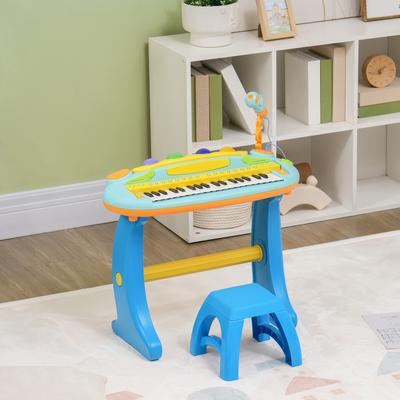
Qaba Kids Piano Keyboard, 37 Key Piano for Kids, Electronic Music Educational Instrument with Microphone, Stool, for 3-6 YearsDescriptions: Spark your child's musical genius with the Qaba kid's piano. This baby piano turns every play session into a concert with 37 keys, 22 built-in songs, and 8 diverse rhythms.85,99 $*Shipping: 0,00 $Secure redirect to the provider
-
All Categories Goods Digital Vernier Caliper, Carbon Fiber Electronic Micrometer Gauge LCD, High Precision Measuring Instrument Digital Vernier Caliper, Carbon Fiber Electronic Micrometer Gauge LCD, High Precision Measuring InstrumentCarbon Fiber Electronic Digital Vernier Caliper Micrometer Gauge LCD Achieve Unmatched Precision and Efficiency When accuracy matters, the Carbon Fiber Electronic Digital Vernier Caliper Micrometer Gauge LCD is your trusted companion. Designed for...35,97 $*Shipping: 0,00 $Secure redirect to the provider
-
Wanted: Explanation of music intervals.
Music intervals are the distance between two pitches. They are named based on the number of letter names they encompass, such as a second, third, fourth, etc. Intervals can be classified as either harmonic (played simultaneously) or melodic (played consecutively). Understanding intervals is crucial in music theory as they help musicians identify and create melodies, harmonies, and chords. **
-
How intense are music intervals?
Music intervals can vary in intensity depending on their size and the context in which they are used. Smaller intervals, such as minor and major seconds, can create a sense of tension and dissonance, while larger intervals, such as perfect fifths and octaves, can create a feeling of stability and resolution. The intensity of music intervals is also influenced by factors such as dynamics, articulation, and the overall musical texture. Ultimately, the intensity of music intervals is subjective and can be perceived differently by different listeners. **
-
How do you hear intervals that sound simultaneously?
When intervals sound simultaneously, I hear them as a combination of two distinct pitches played at the same time. I can distinguish the distance between the two pitches and identify the specific interval based on the difference in pitch. By training my ear to recognize the unique sound of each interval, I am able to identify them even when they are played together. This skill is developed through practice and exposure to different musical contexts. **
-
What are music intervals of the 9th degree?
Music intervals of the 9th degree refer to the distance between two notes that are nine letter names apart in the musical alphabet. For example, a C to a D would be considered a 9th interval. These intervals are known for their dissonant and tense sound, and they are often used to create tension and color in music compositions. In chord structures, 9th intervals are commonly added to create a richer and more complex harmonic texture. **
Similar search terms for Intervals
-
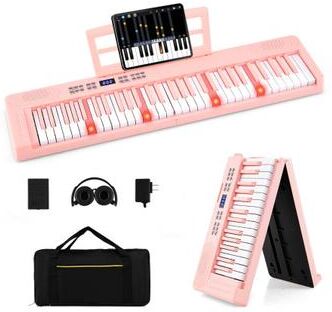
Costway 37-key Kids Electronic Piano Keyboard Playset-PinkThe 37-key toy piano is designed for kids with multiply functions including 8 rhythms, 8 instrument sounds, 4 percussion sounds and demo songs for a little toddler musician to perform freely.54,99 $*Shipping: 0,00 $Secure redirect to the provider
-
What are music intervals of the 8th degree?
Music intervals of the 8th degree are also known as octaves. An octave is the distance between one musical pitch and another with double its frequency. It is the most harmonious interval in music, as the two notes sound very similar but with one being higher or lower than the other. Octaves are often used to create a sense of resolution or to add depth and richness to musical compositions. **
-
How can one determine intervals using music examples?
One can determine intervals using music examples by listening to the distance between two notes played or sung. By comparing the pitch of the two notes, one can identify the specific interval, such as a perfect fifth or a minor third. Additionally, one can use a musical instrument or a piano to play the two notes and visually see the distance between them on the keyboard, helping to determine the interval accurately. Practice and training in music theory can also help develop the skills needed to identify intervals in music examples. **
-
What are music intervals of the 5th degree?
The music interval of the 5th degree is a distance of five letter names in the musical alphabet. For example, the interval from C to G is a 5th because there are five letter names (C, D, E, F, G) between the two notes. In terms of sound, a 5th interval is considered to be consonant and harmonious, and it is commonly found in many musical compositions and melodies. It is often used to create a sense of stability and resolution in music. **
-
How do you determine intervals in music theory?
In music theory, intervals are determined by counting the number of letter names and the distance between them. For example, the interval from C to E is a third because there are three letter names (C, D, E) and the distance between C and E is three half steps. Intervals can also be major, minor, perfect, augmented, or diminished, depending on the number of half steps they contain. The quality of an interval is determined by comparing it to the corresponding major or perfect interval. **
* All prices are inclusive of VAT and, if applicable, plus shipping costs. The offer information is based on the details provided by the respective shop and is updated through automated processes. Real-time updates do not occur, so deviations can occur in individual cases. ** Note: Parts of this content were created by AI.